


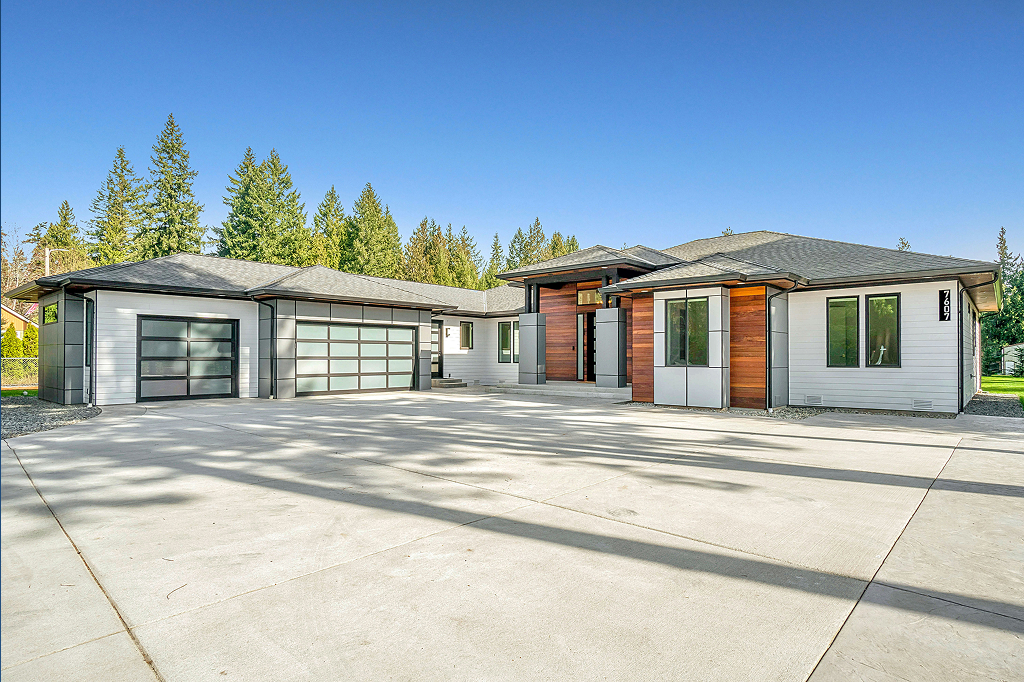
Custom home builders have one major advantage when it comes to SEO: the value of a single search visitor can be enormous.
Someone searching for a restaurant might spend $80. Someone searching for a custom home builder could eventually sign a contract worth hundreds of thousands or millions of dollars. That means a builder does not need tens of thousands of website visitors every month for organic search to become a meaningful source of business.
The challenge is that building a custom home is not an impulse purchase. Potential clients research for weeks or months. They look at projects, architects, neighborhoods, budgets, styles, reviews, processes, and multiple builders before making contact. Increasingly, some of that research is also happening inside ChatGPT, Gemini, and other AI tools.
Good SEO for a custom home builder therefore has less to do with publishing a huge volume of content and more to do with making the company extremely easy to evaluate.
Before researching keywords, I would define the type of work the company wants to win.
“Custom home builder” can describe very different businesses. One builder might specialize in $800,000 homes outside Boise. Another might build $4 million contemporary homes in Park City. Another may do custom homes alongside major renovations and additions.
Those differences should be visible on the website.
If your ideal project is a high-end custom home, the site should not present custom homes, bathroom remodels, decks, and handyman work as equally important services. That creates ambiguity for both customers and search engines.
The strongest positioning usually comes from choosing what you want to be known for and then building the site around evidence that supports it. Your homepage, service pages, portfolio, reviews, location information, and educational content should reinforce roughly the same picture of the company.
Search engines are trying to understand the business. Customers are trying to decide whether it is relevant. Clear positioning helps both.
Most custom builders already possess the raw material for unusually strong website content.
They have professionally photographed homes, floor plans, construction details, challenges that had to be solved, interesting sites, unusual materials, architectural partnerships, and completed projects in the exact communities where they want more work.
Yet many builder websites turn all of that into a gallery.
A visitor clicks “Projects,” sees twelve beautiful homes called things like Aspen House, Mountain Modern, or River Residence, flips through the images, and learns almost nothing about what the builder actually did.
That is a missed opportunity.
A useful project page can explain where the home was built, what the clients wanted, who designed it, what role the builder played, what made the site or construction challenging, what materials or systems were noteworthy, and how the finished home addressed those requirements.
This does not need to become an SEO essay. A few thoughtful paragraphs alongside excellent photography are often enough to transform a portfolio page from a visual gallery into genuine evidence.
If you say you build complicated hillside homes in Park City and your website contains six detailed hillside projects around Park City, that claim becomes considerably easier to believe.
Builders frequently devote far more attention to their portfolio than their service pages.
That makes sense aesthetically. Finished homes are what people want to see. But the person considering a custom build eventually needs to understand much more than whether your work looks good.
Do you work with architects selected by the homeowner? Do you offer design-build? When should the builder become involved? Do you provide preconstruction services? How do budgeting and estimating work? How do you handle subcontractors? What geographic area do you serve? Do you take on major renovations in addition to new construction?
A generic “Our Services” page containing Custom Homes, Remodels, and Commercial Construction in three small cards does not answer those questions.
For the most commercially important services, build pages that explain what the engagement actually involves. Show relevant projects on those pages. Connect the service with testimonials from clients who hired you for that type of work.
The page should help someone understand not just what you do, but what working with you would be like.
Local SEO for a custom builder is not exactly the same as local SEO for a plumber.
A plumber usually wants visibility in a tight service radius and may receive dozens or hundreds of leads. A high-end builder may take only a handful of new projects per year and could reasonably work throughout an entire resort market, metro area, or region.
That changes how I think about geography.
If you build throughout Boise, Eagle, and Meridian, those locations should be represented naturally throughout the site through your projects, service information, reviews, and business information. If you routinely build second homes in McCall, document the projects you've actually completed there.
What I would not do is automatically generate fifty nearly identical pages for every city within 100 miles.
A page titled “Custom Home Builder Eagle Idaho” can be useful if you genuinely have experience there and enough information to make the page worthwhile. The same page becomes much less compelling if it is simply your Boise page with “Boise” replaced by “Eagle.”
Real geographic evidence is more useful than manufactured geographic copy.
A homeowner may first encounter your company on Google Maps even if nobody is literally driving to your office.
They may see the company name, rating, reviews, photographs, location, and website before deciding whether to investigate further. That makes your Google Business Profile another version of your storefront.
Keep the profile accurate. Use the correct category. Add real project photography rather than generic stock imagery. Keep contact details and business information current. Respond to reviews professionally.
Reviews are especially valuable when they contain context.
“Great builder, five stars” is nice social proof. A homeowner describing how your team managed a two-year custom build, communicated through difficult design changes, coordinated with their architect, and delivered the finished home gives another potential customer far more information.
You should never script or manipulate what a client says. But when asking for a review, it is reasonable to encourage people to describe their actual experience.
Custom builders sometimes avoid discussing money anywhere on their websites because every home is different.
That's understandable. Publishing “custom homes cost $750 per square foot” can create more problems than it solves when site, materials, architecture, finishes, geography, and market conditions vary dramatically.
But complete silence can also be frustrating.
A potential client may have no idea whether your typical project is $800,000 or $8 million.
You do not necessarily need to publish a firm price. You can explain the factors that drive cost, describe the scale of projects you typically accept, discuss the relationship between design decisions and construction budgets, or explain when a homeowner should begin budgeting with a builder.
That information does more than attract search traffic. It filters potential clients.
If someone has a $600,000 budget and your projects generally begin around $2 million, it is better for both parties to discover that before spending an hour on a consultation.
The objective of the website should not be to generate the greatest possible number of inquiries. It should help generate the right inquiries.
Custom construction creates an enormous number of legitimate search topics.
When should I hire a builder? Do I need an architect before talking to a contractor? How long does it take to build a custom home? What is preconstruction? How much does site development cost? What makes building on a slope more expensive? How early should I begin planning?
Those topics are much more interesting than publishing another generic article about “2027 Home Design Trends.”
The difference is commercial proximity.
Someone searching for contemporary kitchen trends could be anybody. Someone researching whether to choose their architect or builder first may be relatively early in the process, but they are clearly thinking about building a home.
That is the kind of educational content I would prioritize.
It lets the builder answer from actual experience, demonstrates expertise before a sales conversation happens, and creates natural connections back to relevant service and project pages.
There is no rule that a custom builder needs four blog posts every month.
I'd rather see a builder publish six unusually useful articles per year than forty-eight generic posts written primarily because an SEO contract requires content production.
The same goes for project pages. Adding a detailed project that showcases exactly the type of home you want to build again might create more commercial value than another broad informational article.
Search strategy should follow business value.
If your website is missing a detailed custom-home service page, fix that first. If your best five projects contain only photographs, improve them. If your Google Business Profile is neglected, handle it. If your existing pages are technically difficult for Google to crawl, deal with that before publishing article number seventy-three.
Content volume is not a strategy by itself.
Custom home discovery is beginning to happen through AI systems too.
A buyer can ask ChatGPT for luxury custom builders around Boise, builders experienced with contemporary mountain homes in Park City, or companies known for complicated hillside construction. They can then continue narrowing the search conversationally.
The exact mechanisms deciding which businesses appear are still changing, and anyone claiming to know a universal ChatGPT ranking formula is overstating the evidence.
What we can say is that AI systems need information from somewhere.
Your website is one of those sources. Reviews, directories, publications, architecture sites, local organizations, project partners, and other third-party references can be others.
That makes factual consistency particularly important. An August 2026 audit examined factual claims attached to 182 local businesses recommended by an OpenAI search configuration. Twenty of those businesses had at least one statement that contradicted the evidence researchers could find, while hundreds of additional claims could not be conclusively verified. The study has meaningful limitations, but it highlights an important problem: appearing in an AI recommendation is not enough if the system describes the business incorrectly.
For a builder, the commercially important facts are obvious. Where do you build? What types of projects do you take? What services do you provide? What credentials or awards do you have? What projects demonstrate that experience?
Make those answers explicit and keep them consistent across the places customers and search systems are likely to find them.
Builders also have unusually good opportunities to earn legitimate third-party mentions.
An architect may feature a shared project. A local publication might cover an interesting home. A trade organization may maintain a member profile. A design award may publish winners. A material supplier or photographer might feature the project.
Those mentions are useful because they exist for reasons independent of SEO.
That is generally much more valuable than buying a package promising 100 backlinks from websites nobody in the construction industry has heard of.
You do not need every project featured in Architectural Digest. The objective is to build a credible footprint around the company over time.
When a builder's website says it does exceptional custom homes, its projects show exceptional custom homes, its clients describe exceptional custom homes, architects mention working with the builder, local publications feature its work, and search results consistently connect the company with that market, you have created something much harder to fake than a page full of keywords.
Custom builders should be particularly skeptical of vanity traffic.
A blog post about home-design inspiration could generate thousands of visits from across the country and never produce a single viable project. Meanwhile, a service page might receive only fifty organic visitors in a month and produce an inquiry worth millions.
Those outcomes cannot be evaluated from traffic alone.
I would track visibility for high-intent searches, Google Maps presence, branded search growth, performance of major service and project pages, AI recommendation share where it matters, and ultimately the quality of inquiries coming through the website.
Ask new leads how they found you too.
Attribution is getting increasingly messy. Someone may discover your company in ChatGPT, search the business name on Google, look through Maps reviews, visit five project pages, follow you on Instagram, and finally contact you three weeks later. Google Analytics may only record the final Google visit.
The customer journey matters more than whichever platform received attribution.
The best custom home builder websites do not need to scream about SEO.
They need to make the company easy to understand and difficult to dismiss.
Show your best work. Explain the work clearly. Document where you've actually built. Connect services with relevant projects. Answer the questions serious homeowners ask. Keep your business information accurate. Build a reputation beyond your own website.
If you do those things well, you're simultaneously improving the experience for potential clients, Google, and increasingly AI-driven search systems.
For a business where one good lead can become a multimillion-dollar project, that is a much more useful objective than chasing traffic for its own sake.
Belorado GEO helps custom builders and other high-value service businesses improve how they are discovered across Google Search, Maps, ChatGPT, Gemini, and the rest of the modern search ecosystem. If you want to see where your company is currently visible and where competitors are being recommended instead, get a free visibility audit.
